Hotel Lobby Lounge Furniture Indonesia: A Complete Sourcing Guide for US Hospitality Projects
14 min read
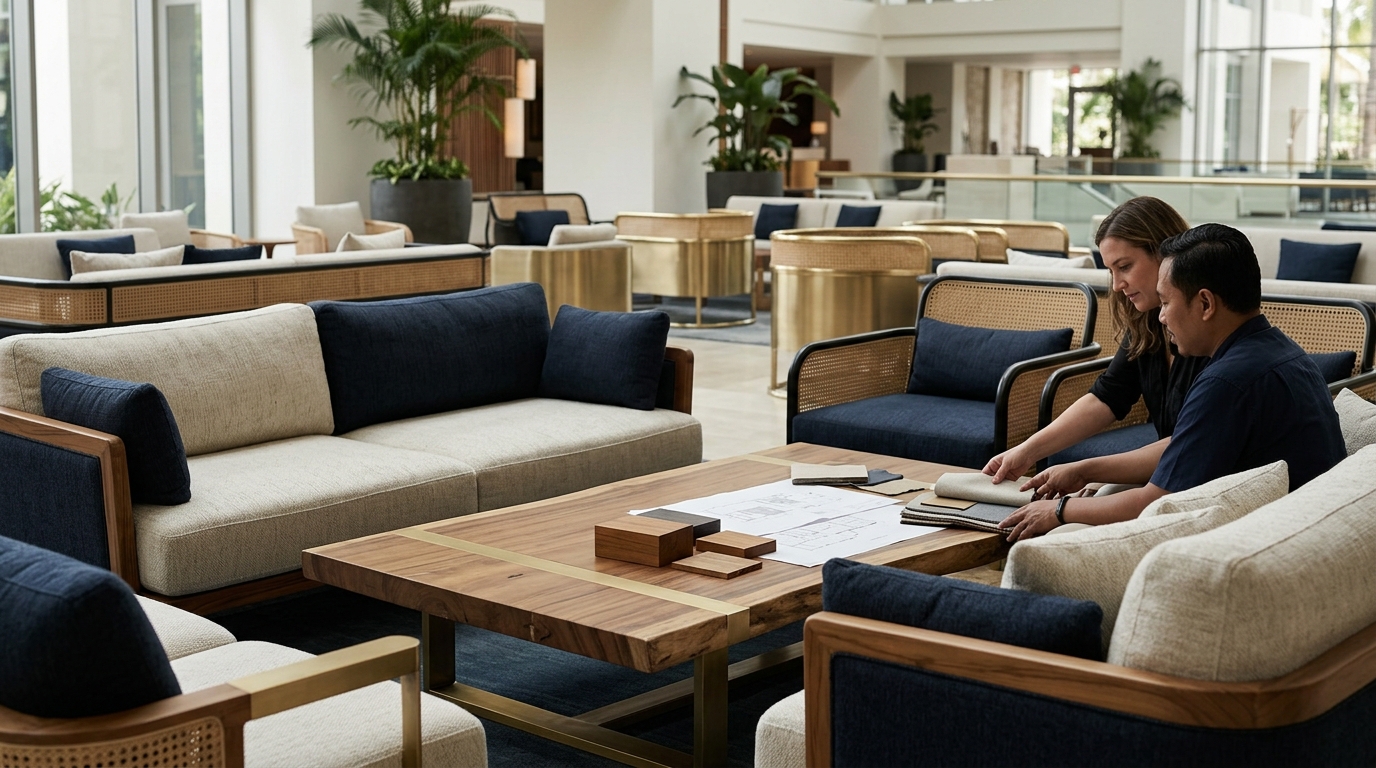
Sourcing hotel lobby lounge furniture from Indonesia is a strategic procurement decision, not just a cost play. US hotel developers and FF&E managers face a common challenge: specifying oversized, statement-quality lounge pieces that perform under 24/7 commercial conditions while fitting a defined…
Sourcing hotel lobby loungefurniture from Indonesiais a strategic procurement decision, not just a cost play. US hotel developers and FF&E managers face a common challenge: specifying oversized, statement-quality lounge pieces that perform under 24/7 commercial conditions while fitting a defined project budget and timeline. Domestic custom fabrication is expensive.
This guide covers the full procurement cycle for hotel lobby loungefurniture from Indonesia. Topics include material selection, durability engineering, customization workflows, freight logistics, and supplier vetting.
Indonesian furniture manufacturingis concentrated in specific regional clusters. Jepara in Central Java leads in solid teak and carved wood production. Bali handles luxury artisan and resort-grade pieces. Cirebon specializes in rattan.
Why Indonesian Manufacturers Lead in Hotel Lobby Lounge Furniture Supply
Indonesia's furniture export industry has developed over several decades into one of the most capable natural-materials supply chains in the world. For US hotel projects requiring large, statement pieces with visible craftsmanship, that history matters.
Raw Material Advantage No Other Origin Matches
Indonesia holds some of the world's largest managed teak plantations, primarily in Java. Teak is the benchmark hardwood for commercial hospitality furniture: dense grain, natural oil content, high resistance to warping and moisture.
This material stack is not easily replicated. Vietnam produces excellent solid wood furniture, but its teak supply is limited and often imported. China's strength lies in engineered panels, upholstery, and metal fabrication — not in artisan natural wood and woven natural fiber at the same quality tier.
Competitive Pricing Relative to Alternative Origins
| Origin | Strength | Typical Positioning vs. Indonesia |
|---|---|---|
| Indonesia | Teak, rattan, handcraft, natural stone | Baseline reference |
| Vietnam | Solid wood, US-market experience | Comparable or slightly lower on standard pieces; less artisan depth |
| China | Volume, automation, upholstery | Lower on standard items; limited on natural material character |
| US Custom | Domestic fabrication, quick lead times | Typically 2–4× higher on custom oversized pieces |
| Europe (Italy, Spain) | Design, premium upholstery | Significantly higher; often 3–5× on comparable specs |
For oversized custom sofas, feature coffee tables with stone inlays, and sculptural accent chairs — the categories that define a hotel lobby's character — Indonesian manufacturing offers strong value per finished unit at commercial quality levels.
Established Export Infrastructure for US Hotel Projects
Jepara-based manufacturers and Bali-based artisan producers have exported to the US hospitality market for many years. Most established factories understand FOB pricing, export documentation, ISPM-15 phytosanitary compliance, and container loading requirements. Many work with US-based freight forwarders regularly.
Signature Materials That Define Indonesian Lobby Lounge Furniture
Teak and Reclaimed Teak
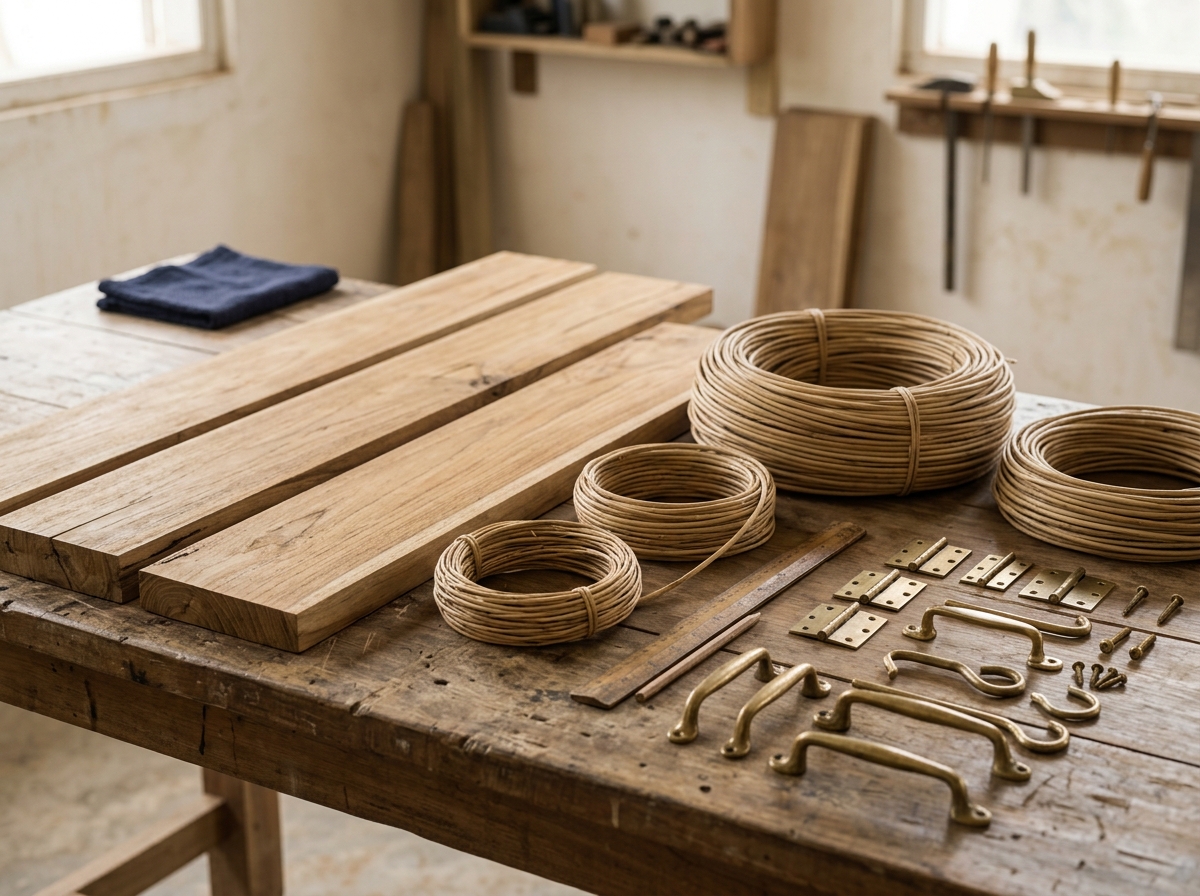
Plantation teak from Java is the structural backbone of most high-grade Indonesianhotel furniture. It machines cleanly, accepts mortise-and-tenon joinery well, and develops a silver-grey patina if left untreated or a rich honey tone when oiled.
Reclaimed teak — sourced from decommissioned structures — adds visual depth and natural variation. It is frequently used for feature tabletops and console surfaces in lobby settings where a sense of provenance is part of the design brief.
Rattan and Woven Natural Fibers
Cirebon in West Java is Indonesia's rattan production center. Rattan frames are used for lounge chairs, accent seating, and decorative accents in hotel lobby environments. For commercial use, rattan must be combined with structural timber or metal sub-frames.
Woven natural fiber panels — using sea grass, water hyacinth, or abaca — appear as decorative inlays in headboards, cabinet fronts, and lounge chair backs. These add texture without adding structural load.
Mixed-Material Hardware and Stone Inlays
Brass and blackened iron hardware details are characteristic of Indonesian statement furniture for hotel lobbies. Brass ring pulls, strap hinges, and exposed rivet details give lobby consoles and sideboards their visual weight.
Natural stone sourced in Indonesia — particularly andesite (a dark volcanic stone found in Java) and white or grey marble — is used for tabletops and surface inlays. Andesite is dense, matte, and resistant to staining, making it well-suited for cocktail table tops in high-use lounge zones.
Key Furniture Categories for Hotel Lobbies and Lounges
Oversized Custom Sofas and Sectional Seating
The arrival lounge sofa is typically the anchor piece of any hotel lobby design. Indonesian manufacturers produce custom sectional configurations in almost any dimension. Standard modular systems can be adapted or entirely bespoke silhouettes can be developed from concept drawings.
Upholstery on these pieces can be specified in COM (Customer's Own Material) fabric or leather. Most established Jepara and Bali factories support COM programs — more on that in the customization section.
Statement Coffee and Cocktail Tables
Mixed-material tables are among Indonesia's most exportable hotel lobby lounge furniture categories. A typical configuration combines a solid teak or suar base with an andesite, marble, or reclaimed wood top.
For project procurement, specify stone type, thickness (typically 20–30mm for tabletops), edge profile, and finish in writing. Stone sourcing within Indonesia varies by region; confirm material origin and availability before locking in the design.
Feature Armchairs and Accent Chairs
High-back armchairs with teak or rattan frames define conversation zones and bar seating areas in hotel lobbies. Indonesian manufacturers produce these in both traditional joinery and contemporary minimalist silhouettes. For bar-height pieces, specify seat height clearly — US bar and counter heights differ from Asian domestic standards.
Reception Consoles, Sideboards, and Storage Pieces
Lobby consoles and sideboards from Indonesia typically feature teak or suar carcass construction with brass or iron hardware. These are often the most structurally straightforward pieces in a hotel lobby FF&E package, but their visual impact depends on finish quality and hardware selection.
Engineering for Durability: Commercial-Grade Standards for 24/7 Lobby Use
Frame Joinery for High-Traffic Environments
Oversized lobby seating places extreme stress on frame joints. For commercial use, specify:
- Mortise-and-tenon joints with hardwood dowels and waterproof PVA or epoxy adhesive - Double-dowel corner blocks at all seat rail intersections - Steel L-brackets as secondary reinforcement on large sectional frames
Avoid pieces that rely solely on pocket screws or butt joints for structural connections. Ask factories to show joinery details in production drawings before approval.
Upholstery Performance Standards
Commercial upholstery for hotel lobbies must meet rub-count minimums. For seating in high-traffic public areas, specify fabric with a minimum of approximately 50,000 double rubs (Wyzenbeek method) or 40,000 cycles (Martindale).
Leather upholstery must be specified as full-grain or top-grain commercial grade. Bonded or split leather is not appropriate for hotel lobby seating.
Finish Treatments for Hospitality Environments
Teak and suar finishes for lobby interiors should use catalyzed lacquer or hardwax oil systems. These resist daily cleaning with commercial-grade detergents better than standard oil or wax finishes. For pieces near entry areas or in humid climates, request humidity-resistance specifications in writing.
Brass hardware should be lacquered or powder-coated to prevent tarnishing in air-conditioned environments. Raw brass will oxidize quickly in high-traffic areas.
Fire Retardancy
US hospitality projects are typically subject to NFPA 261 or California TB 117-2013 fire standards for upholstered seating, and NFPA 701 for fabric. Indonesian manufacturers can apply fire-retardant foam and FR barrier fabric to meet these requirements.
Customization Options: Bespoke Design for Unique Hotel Interiors
Most established Indonesian furniture manufacturers — particularly in Jepara and Bali — operate as production-ready custom factories. They do not require buyers to select from a fixed catalogue.
Working With Factories on Custom Dimensions and Silhouettes
Submit technical drawings, mood boards, or reference images. Factories with hospitality experience will return shop drawings for approval before cutting begins. Expect one to two rounds of drawing revisions on complex pieces. Lock dimensions before production starts — changes after material cutting incur additional costs.
Material and Finish Selection
Most factories offer selection boards covering:
- Wood species: teak, reclaimed teak, suar, mahogany - Stone: andesite, marble, limestone, travertine - Metal tones: natural brass, antique brass, blackened iron, brushed nickel - Wood finish: natural oil, dark walnut stain, whitewash, ebonized, lacquered
Request physical sample boards, not digital swatches. Color rendering varies significantly between screen and material.
COM Upholstery Programs
COM (Customer's Own Material) programs allow US interior design firms to specify their own fabrics — often sourced from US suppliers such as Maharam, Knoll, or Kravet — and ship the material to the Indonesian factory for upholstery. Most established hospitality-focused factories in Indonesia support COM.
Workflow for COM programs:
1. Confirm factory's COM acceptance policy and cutting requirements 2. Calculate yardage per piece (factory will provide cut sheets) 3. Ship fabric to factory with 10– approximately 15% overage allowance 4. Factory applies fabric and ships finished pieces
Prototyping and Sample Approval
For orders of ten or more units of a custom piece, request a pre-production prototype. Prototype approval adds four to six weeks but eliminates expensive corrections during full production. For unique statement pieces ordered as single units, detailed shop drawings and finish samples are the practical alternative.
Coordinating Loose Decor and Accessories from Indonesian Suppliers
Hotel lobby design extends beyond seating and tables. Indonesian suppliers — particularly in Bali — produce complementary decorative objects: ceramic planters, hand-cast brass sculptures, woven wall panels, and carved stone accent pieces.
Bundling accessory orders with furniture orders from the same region offers practical advantages:
- Single freight consolidation reduces per-unit shipping cost - Customs documentation is simplified under one commercial invoice - Lead times can be aligned so furniture and accessories arrive in the same container window
- ✓Decorative ceramic and terracotta planters
- ✓Hand-cast brass and bronze sculptures
- ✓Woven rattan and natural fiber wall panels
- ✓Carved andesite and sandstone decorative objects
- ✓Hand-blown glass lighting components
- ✓Batik and natural dye textile cushion covers
Ensure that accessory finishes — metal tones, stone types, natural fiber textures — are selected from the same palette as the primary furniture pieces. Visual cohesion across statement furniture and loose accessories is what separates a resolved hotel lobby from a collection of unrelated objects.
Freight and Logistics for Oversized Hotel Furniture Shipments to the USA
LCL vs. FCL Container Options
| Shipping Mode | Best For | Trade-offs |
|---|---|---|
| LCL (Less than Container Load) | Small orders, sample shipments, 1–5 pieces | Higher per-CBM cost; longer transit due to consolidation |
| FCL 20' | Mid-size orders, 6–20 pieces depending on size | Better per-unit cost; faster terminal handling |
| FCL 40' | Full project orders, complete lobby packages | Lowest per-unit freight cost; most efficient for full FF&E packages |
For most hotel lobby projects sourcing a full suite of lounge furniture — sofas, tables, chairs, consoles — an FCL 40' or 40' HC (high cube) container is the standard approach. Bundling accessory orders into the same container reduces freight cost per unit significantly.
Crating and Export Packaging Standards
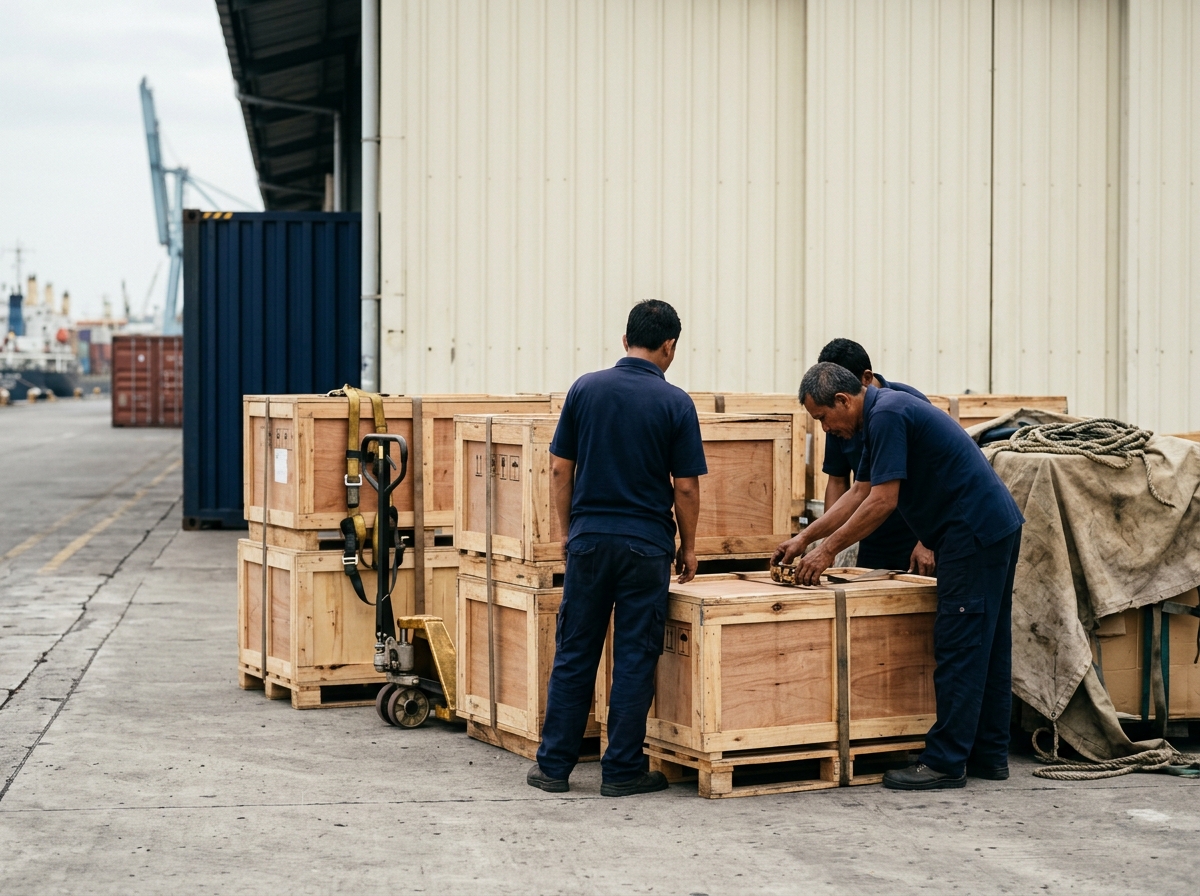
Oversized pieces require custom timber crating. Indonesian exporters with hospitality experience crate each piece individually, using foam padding, corner protectors, and stretch wrap before crating. Crates must comply with ISPM-15 standards (see below). Confirm crating specifications in your purchase order — some factories treat packaging as an afterthought.
ISPM-15 Phytosanitary Compliance
ISPM-15 is an international standard requiring that wood packaging materials — including crates, pallets, and dunnage — be heat-treated or methyl bromide-fumigated to eliminate pest risk. All wood packaging entering the United States must be ISPM-15 compliant and stamped with the official mark.
This applies to the crating materials, not the furniture itself. However, solid wood furniture shipped to the US must also be accompanied by a phytosanitary certificate issued by Indonesia's Ministry of Agriculture when required by US Customs. Work with your freight forwarder to confirm documentation requirements for each shipment.
US Customs, Import Duties, and SVLK
Wood furniture from Indonesia entering the US is subject to import duties under HTS Chapter 94. Duty rates vary by product category — typically in the range of 0% to approximately 6% for most wood furniture categories, but confirm the applicable HTS code with your customs broker for each item type.
Indonesia's SVLK (Sistem Verifikasi Legalitas Kayu) is the government-mandated timber legality verification system. SVLK certification confirms that wood used in Indonesian furniture exports comes from legal sources.
FSC (Forest Stewardship Council) certification is an additional voluntary standard that many US hotel brands and LEED-aligned projects now require. Request FSC chain-of-custody certificates from the factory if your project has a sustainability specification.
Lead Times
| Phase | Typical Duration |
|---|---|
| Design approval and sampling | 2–4 weeks |
| Production (custom, commercial-scale) | 10–16 weeks |
| Ocean freight, Indonesia to US West Coast | Approximately 18–25 days |
| Ocean freight, Indonesia to US East Coast | Approximately 28–35 days |
| US port clearance and inland delivery | 1–2 weeks |
| **Total project window** | **Approximately 16–24 weeks** |
Plan procurement timelines accordingly. Hotel opening schedules with hard FF&E delivery dates should build in buffer time for production delays and port congestion.
How to Vet and Select a Reliable Indonesian Furniture Manufacturer
Certifications to Require Before Placing an Order
| Certification | What It Covers | Why It Matters for US Hotels |
|---|---|---|
| SVLK | Indonesian timber legality | Lacey Act compliance; required for legal wood furniture export |
| FSC Chain of Custody | Sustainable forestry sourcing | LEED projects; brand sustainability commitments |
| ISO 9001 | Quality management systems | Consistent production process control |
| BSCI or Sedex | Social compliance audit | Required by many US hotel brands' sourcing policies |
Factories that cannot provide SVLK documentation should not be considered for US hotel projects. This is not optional — it is a legal export requirement.
Factory Audits and Reference Projects
Request the following before signing a purchase order:
- Factory audit report (independent third-party preferred; within the past 18 months) - Hospitality client portfolio with named project references - Photos of current production floor and quality control processes - Sample pieces or finish samples shipped to your office
Never rely solely on website images or Alibaba profile ratings as verification. Physical factory visits or third-party audits are the standard for serious hospitality procurement programs.
MOQ Structures for Custom Hotel Furniture
Indonesian custom furniture factories typically apply MOQ in one of two ways:
1. Per-design MOQ: Minimum of 2–5 units of the same design to justify setup and pattern-making costs 2. Order value MOQ: Minimum total order value (often in the range of several thousand USD FOB) regardless of piece count
Single-unit statement pieces are available from artisan workshops in Bali, but at higher per-unit pricing. For full lobby packages, most Jepara factories will work with mixed orders across multiple designs if the total order value meets their threshold.
Red Flags in Supplier Communication
Watch for these signals during the inquiry and negotiation phase:
- Refusal to provide SVLK or FSC documentation - No hospitality project references available - Price quotes with no lead time or specification detail - Reluctance to provide a production schedule or milestone plan - No written confirmation of fire compliance capability - COM programs refused without explanation
- ✓SVLK timber legality certificate confirmed
- ✓FSC chain-of-custody certificate (if required by project)
- ✓ISO 9001 or equivalent quality system in place
- ✓Independent factory audit report available
- ✓Hospitality client portfolio with named references
- ✓COM upholstery program supported in writing
- ✓Fire compliance capability confirmed with test certificates
- ✓ISPM-15 compliant export packaging confirmed
- ✓Production schedule with milestones provided in writing
- ✓Freight forwarder references or preferred logistics partners named
Frequently Asked Questions: Sourcing Hotel Lobby Lounge Furniture from Indonesia
What is the typical lead time for custom hotel lobby furniture from Indonesia to the USA? Total project lead time — from design approval to US delivery — is typically 16 to 24 weeks. Production alone runs 10 to approximately 16 weeks for custom commercial pieces.
Which wood species from Indonesia are best suited for 24/7 commercial lobby use? Plantation teak is the benchmark choice: dense grain, natural oil, high resistance to warping and humidity changes. Suar wood (rain tree) is a strong secondary option — wide slabs with natural live edges are common in feature tabletops.
How are oversized Indonesian furniture pieces packaged and shipped internationally? Each piece is individually foam-padded, wrapped, and placed in a custom timber crate built to ISPM-15 standards. Large sectionals are typically disassembled into modules for crating and reassembled on-site. FCL 40' containers are standard for full hotel lobby packages.
Can Indonesian manufacturers produce furniture to US fire-retardancy and commercial standards? Yes, but compliance must be specified in writing. Indonesian factories can apply FR foam, FR barrier fabric, and FR-treated materials to meet NFPA 261, California TB 117- approximately 2013, and NFPA 701 requirements.
What are the import duties and customs requirements for wood furniture from Indonesia into the USA? Import duties on wood furniture under HTS Chapter 94 typically range from 0% to approximately 6%, depending on the specific product category. Confirm the applicable HTS code with your customs broker.
How do I coordinate upholstery fabric (COM) with an Indonesian hotel furniture manufacturer? Confirm the factory's COM acceptance policy first. Request cut sheets to calculate yardage per piece, then ship fabric to the factory with a 10–15% overage allowance.
Indonesian manufacturers in Jepara, Bali, and surrounding production clusters offer US hotel developers a rare combination: premium natural materials, genuine handcraft capability, commercial-grade engineering when properly specified, and established export infrastructure for the US market.
You now have the framework to evaluate Indonesian hotel lobby lounge furniture suppliers with the rigor that a commercial hospitality project demands. The logical next step is to connect with a vetted manufacturer who can receive your project brief and return a qualified custom quote.
You have the specifications. Connect with an Indonesian manufacturer experienced in commercial hospitality projects — custom dimensions, COM upholstery, fire compliance, and FCL export to the USA.
Request a Custom Quote →Need eyes on the ground in Indonesia?
MTS is an execution partner — supplier verification, manufacturing management, quality control and export logistics across Indonesia, Vietnam and China.
Related services
Related articles
Receive furniture sourcing insights across Asia.
One email per week. No spam.